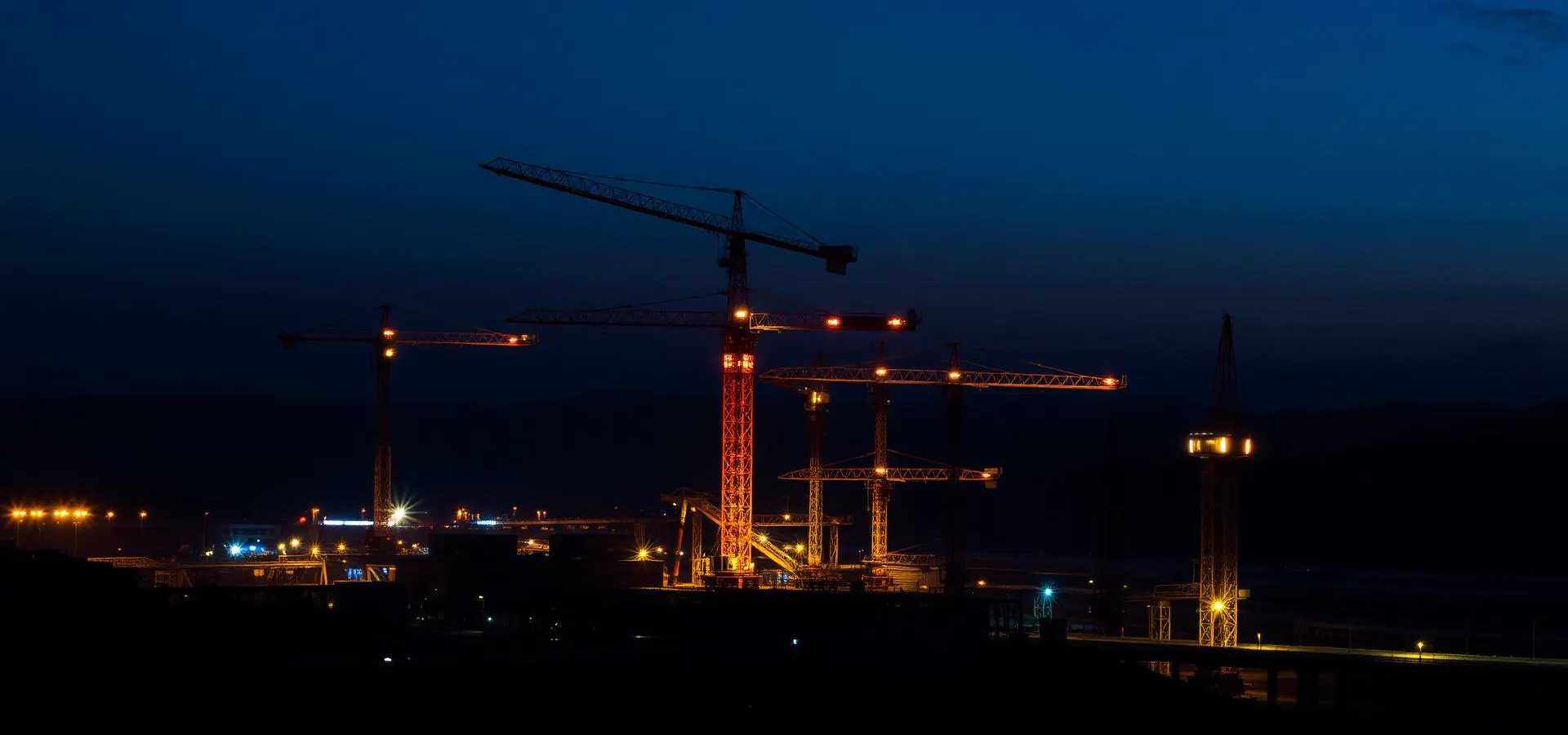
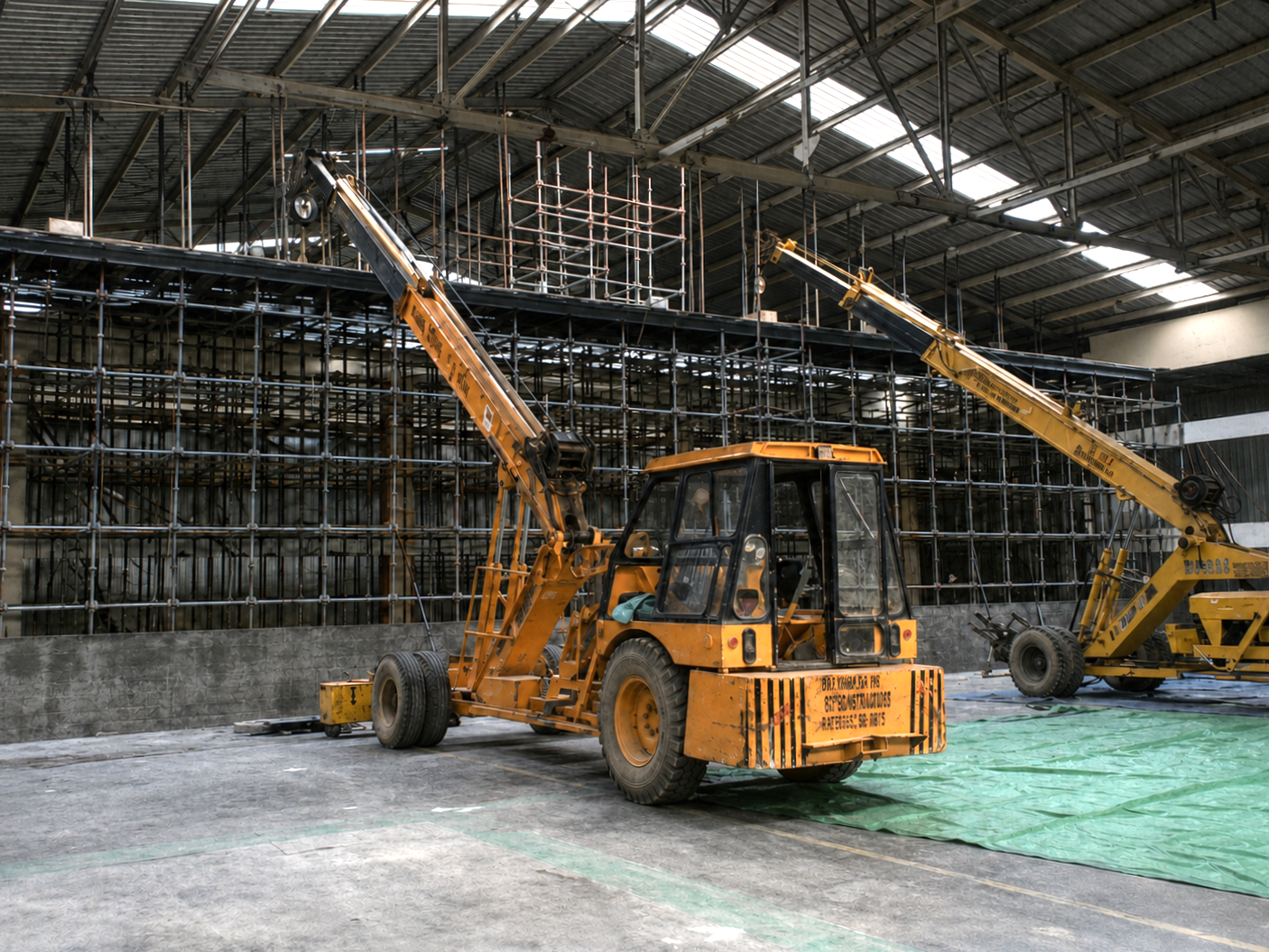
LG Electronics
When construction cannot stop production.
Construction inside an operating industrial facility is different from working on an empty site.
Read story: When construction cannot stop production.Stories from Site
Lohaghat, Champawat, Uttarakhand
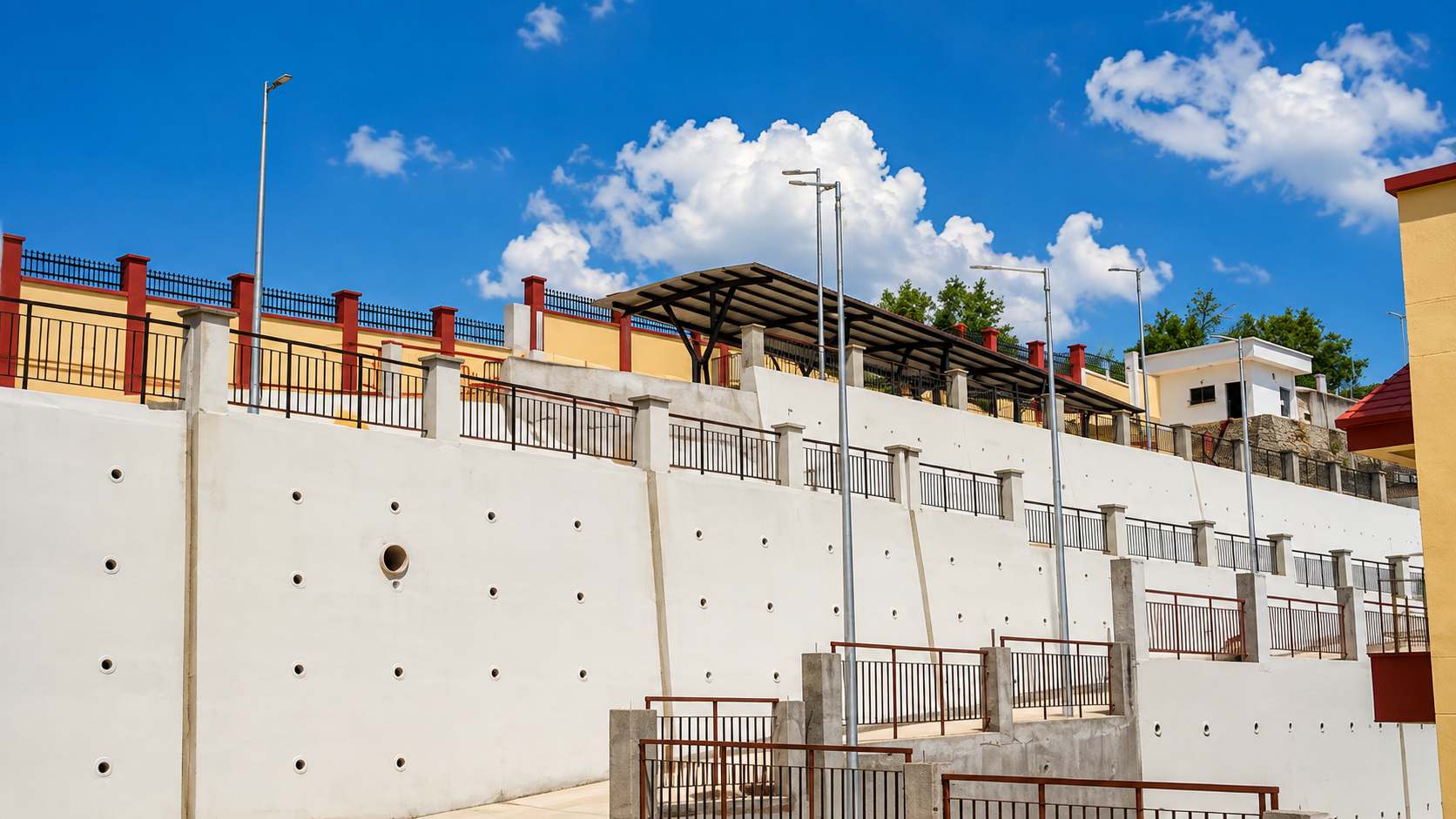
Construction in Lohaghat brings challenges that rarely appear on a drawing — steep terrain, limited access, changing weather and the movement of material through the hills. At the Kendriya Vidyalaya site, excavation generated a substantial quantity of soil. Rather than treating it simply as waste to be transported away, coordination with the nearby ITBP establishment allowed usable excavated material to support site-development requirements there. It was a practical solution to a very local construction problem — reducing unnecessary movement while putting available material to productive use.
A drawing shows levels, grids and sections. It does not show the gradient of the approach road, the width available for a truck to turn, or what happens to that road after two days of rain. In Lohaghat, those things decide the sequence of work as much as the design does.
The site sits on sloping ground, so the first substantial activity was cutting and levelling rather than foundations. Excavation in hill terrain is rarely a single operation — it proceeds in stages, each one held by temporary or permanent support before the next is opened up. Retaining structures were therefore not an incidental item; they set the platform on which everything else could be built.
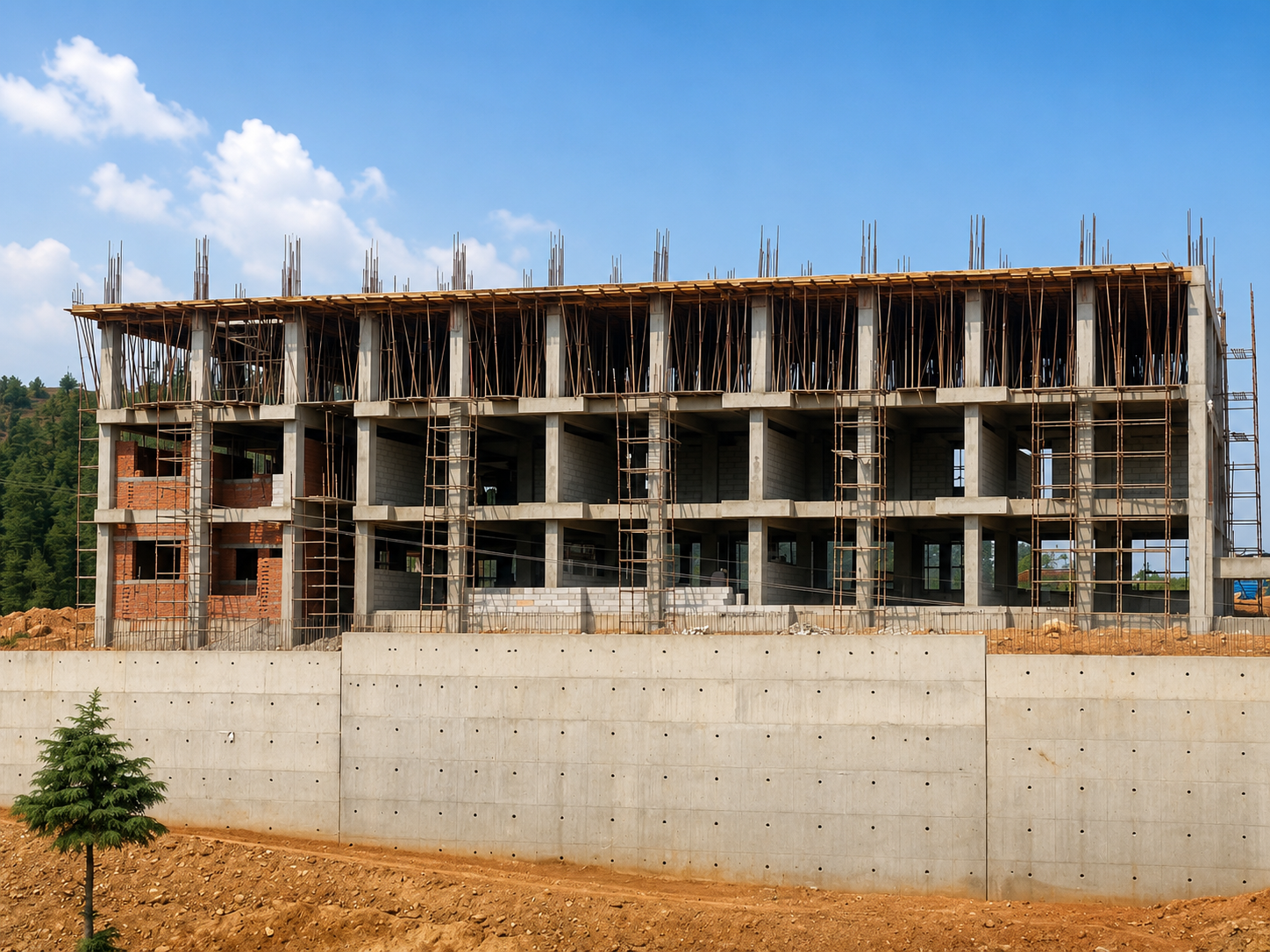
Material reaches a hill site in smaller consignments and on a tighter schedule than it would on a plain. Delivery windows, stacking areas and internal movement all have to be planned against the space actually available on the platform. Stock is kept close to the work front because there is nowhere else to keep it.
Excavation generated a substantial quantity of soil. Carting it away would have meant repeated vehicle movement on the same constrained roads that were already carrying material in. Coordination with the nearby ITBP establishment allowed usable excavated material to support site-development requirements there instead. The soil moved a short distance and was used, rather than travelling a long distance to be dumped.
The teams on this site work through cold mornings, intermittent rain and a working day shaped by daylight and road access. None of that is unusual for construction in the hills, and it is not presented here as heroic. It is simply the condition under which the work is planned, supervised and completed.
More stories
LG Electronics
Construction inside an operating industrial facility is different from working on an empty site.
Read story: When construction cannot stop production.
Emaar NPNL and associated infrastructure works
A finished development reveals very little of the work beneath it.
Read story: Some of the most demanding work disappears underground.Start a conversation
Whether you're planning a commercial development, industrial facility, infrastructure project or turnkey solution, our engineering team is ready to help bring your vision to life.